
How to take care of your indoor orchid plant
Orchids are lovely houseplants and super popular in the UK. But many people struggle to keep them alive. So in this guide, you’ll find all the tips and tricks from our flower experts to help you keep your orchid plant happy and thriving for years to come.
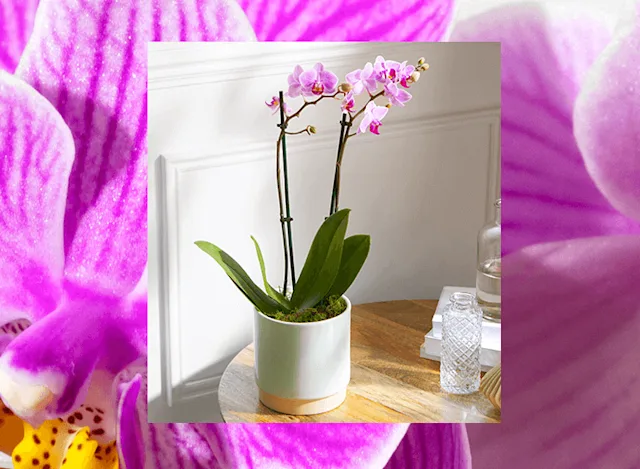
Top tips on caring for orchids
Like all indoor plants, orchids need a few core things to survive. Water, light, food and the right temperature and humidity levels. Getting these things right early on will make sure your precious plant lives a long life!
1. Water occasionally
Because orchids are a tropical plant they don’t need watering a lot. In fact, overwatering is one of the main killers of this pretty plant - so be careful. Typically, orchids need watering once a week. One thing to remember though is to make sure you have a pot with holes in the bottom - and soil that makes draining easy - as orchids don’t like sitting in a pool of water.
2. Don’t leave it in the sun for too long
Just like humans, if orchids are out in the sun for too long they’ll suffer from sunburn - yes, really. Indirect sunlight is best for this plant. So, placing it on a windowsill where it gets a lot of natural light and has a consistent temperature is perfect.
3. Keep humidity levels hig
Humidity is vital as it helps to recreate the natural habitat of the orchid. There are lots of easy ways you can help raise the humidity levels around your plant. Regular misting is the most popular choice as it’s a quick way to keep the orchid happy. Another way is to place the pot on a tray of pebbles filled with water for a natural, humid environment.
4. Feed orchids during their growth spurts
Every now and then your orchid may need some food to help perk it up and encourage growth. The amount you feed it depends on the type of orchid you have, so make sure you read the care booklet that comes with your Bloom & Wild orchid to know exactly what to do. Normally, you’ll need to feed it more during spring and summer as those are its active growing months. But, remember, on the week that you do feed your orchids, there’s no need to water it as well.
Different types of orchids
There are many different types of orchids you can get to spruce up your home decor. And each one has its own specific care needs so it’s important to do your research and learn what exactly your orchid needs. Here are the 3 most popular types of orchids people have as houseplants:
1. Dendrobium orchid
The fabulous dendrobium orchid is one of the easiest orchids to grow and blooms exotic pure-white flowers from April to June. These orchids need moist soil during their growing periods. When they’re not growing, they still need to be watered often but also need a brief dry period between watering too.
2. Phalaenopsis orchid
Perfect for beginners, the phalaenopsis orchid, or moth orchid as it’s also known, is super easy to grow and is one of the longest blooming plants, producing coloured flowers for 2-6 months and often several times a year too. This type of orchid also needs brief dry periods between every watering.
3. Cymbidium orchid
The cymbidium orchid - often called the boat orchid - is the oldest cultivated orchid, with evidence going all the way back 2500 years ago in 500 BC China. Flowering from autumn to spring, this type of orchid is a little more demanding than others as they need their soil to be moist at all times, but not soggy or wet.
How often do orchids need pruning?
Once your orchid has bloomed, the flowers can last for up to 12 weeks before needing to be pruned. You’ll notice they may start to droop or fade or some of the flowers may fall off completely. If the stems are still green, that means they’re in a good, healthy condition so you’ll only need to trim just one inch above the node where the first flower has bloomed. Make sure you cut diagonally to help it grow nice and strong for the next flowering season.
If you have stems that have turned brown, then they’ll need to be cut all the way back to the base of the plant so it can focus on producing new, healthy leaves and roots. Trimming your orchid after it’s finished blooming is the best way for it to regrow the following year.
Want more expert advice on caring for your precious plants? Have a read of our indoor plant care guide for everything you need to know.
Browse our collection of indoor plants, from super succulents to marvellous monsteras!