
Your guide to caring for an orange tree
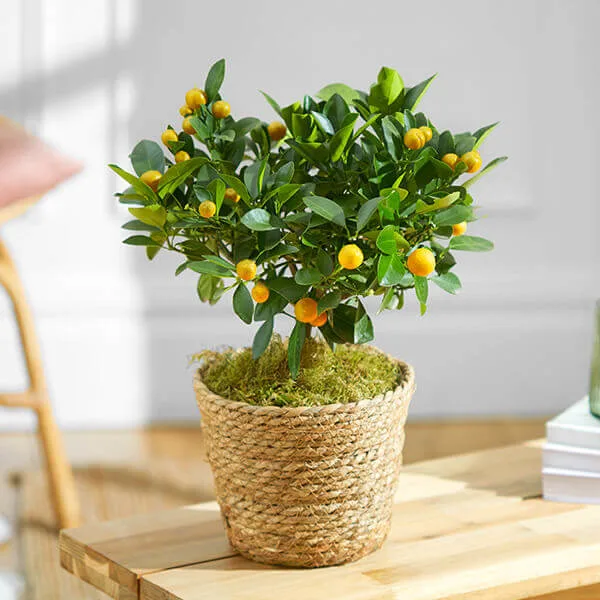
If you thought orange trees only grow in warmer climates, think again. The variety you can shop on our site – the calamondin orange – can thrive inside your home. (Even with unpredictable British temperatures).
A cross between the kumquat and a mandarin orange, the fruit this little tree produces is lovely to look at (but not possible to eat!). Their scent will fill the room with the most delicious citrusy fragrance too. Lucky enough to already own one? Here’s everything you need to know about caring for it.
How to care for your orange tree
The calamondin orange tree is one of the easiest fruit trees to grow inside your home. Following these simple tips will make sure it loves living with you.
Water when the top inch of soil is dry
During spring and summer, your orange tree will typically need a drink every 5-7 days – though if the weather is particularly warm, you may want to up this. In winter, hold off watering it until the top inch of soil feels dry.
Pop it somewhere bright
Orange trees love bright direct sunlight, so we’d recommend popping yours by your sunniest window. They need a minimum of 4 hours of light each day. If the weather’s been warm, you can even leave yours outside (though, they’ll be happiest indoors from November to April). To help yours grow evenly, give it a spin every now and then.
Feed during the summer months
We’d recommend giving your tree some fertiliser from May to September (or when you’ve repotted it) to encourage healthy growth. Liquid food made specifically for citrus plants works the best.
Prune only when needed
These plants are naturally quite unfussy when it comes to pruning. You’ll only need to trim yours if it becomes too leggy or crowded. Always make cuts at an angle, right above the node (the small bump on the branch) to promote new growth.
What to expect during fruiting season
We send our orange trees with fruit already on their branches. Over time, they’ll begin to ripen, turning from green to vibrant orange. Unlike many other plants, fruit can remain on the tree almost year-round. You may even see some delicately scented white blossoms pop up too.
Calamondin oranges ripen faster when it’s warm and sunny during the day, then cooler in the evening. The difference in temperature helps speed up the process. If conditions are ideal, they should have matured by June – though, you may have to wait until August if the weather’s been unpredictable.
We’d recommend keeping them away from any pets as they’re toxic if ingested.