
Your Kentia palm care guide
Who doesn’t love the easy, breezy vibes of a Kentia palm? They’re originally from Lord Howe Island (just off the coast of Australia). But, unlike most tropical plants, they can tolerate lower light conditions. Making them an ideal indoor starter plant.
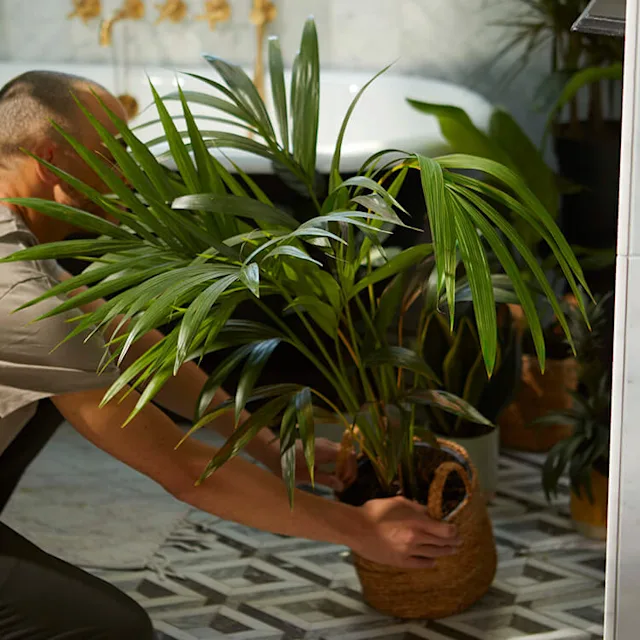
How to care for a Kentia palm
Keep it in a relatively sunny spot
Kentia palms prefer bright, indirect light. But can tolerate lower light levels. Yours will thrive if you pop it somewhere that gets a decent amount of sunlight each day. But make sure that’s through blinds or net curtains – direct sunlight will scorch the leaves.
Water when the soil feels dry
This plant likes its soil to be kept evenly moist. But never waterlogged. So only water when the top inch of soil feels dry – roughly every week or so. You can check by pushing your finger into the soil.
Up the humidity around your plant
Kentia palms are known for being quite unfussy. But as they’re from a more tropical region, they’d appreciate a light mist every now and then. If the air in your home is very dry, try a humidifier. Or pop it in a steamy room (like your bathroom).
Give it an occasional feed
To help your plant grow even more lush fronds, feed it every two to three months with a water-soluble fertiliser. Any more often and you risk causing leaf burn (crispy, wilting or discoloured leaves). Only feed your Kentia palm during growing season (March to September).
What are the signs of an unhappy Kentia palm?
Brown leaf tips
This is often a sign of low humidity or over-fertilizing. Follow the tips above to find out the best ways to up the humidity. And try to keep your plant on a strict fertiliser schedule (every two to three months) during spring and summer.
Yellow leaves
You may be underwatering your plant. Try to water it as soon as you notice the soil going dry. If you don’t think that’s the reason, you’re likely not fertilising your plant enough (or at all).
Bugs
Kentia palms can sometimes attract spider mites or scale. You can get rid of them with non-toxic insecticidal soap or neem oil. Whichever option you choose, dilute it with some water in a spray bottle. Then spray the mixture anywhere you notice the bugs, including the underside of the fronds (where they like to hide!).
Do I need to repot my Kentia palm?
Because Kentia palms are relatively slow-growers, they don't need frequent repotting. Every two to three years is often enough – or when you notice its roots peeking out the bottom.
The best time to repot your plant is during growing season (spring or early summer).
1. Choose a pot with drainage holes that’s slightly larger than the current one. Then fill the bottom of the pot with a layer of well-draining potting mix.
2. Remove your Kentia palm from its original pot by tipping it on its side and carefully sliding it out. If it’s being stubborn, gently squeeze the sides of the pot.
3. Pop your plant in the centre of the new pot and fill around its roots with the new potting mix, pressing down gently to remove air pockets.
4. Finish by lightly watering the soil.