
Pachira money tree plant care guide
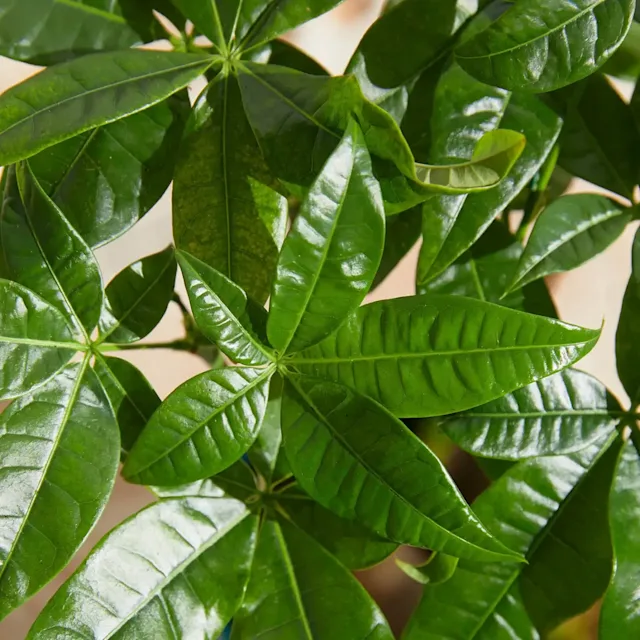
The pachira money tree, or pachira aquatica as it’s also known, will transform your home into an indoor jungle in an instant! With its big, green leaves and braided trunk, this tree knows just how to stand out and get all the attention. And, it can grow up to 2 metres tall, so it’ll look amazing in a pretty pot either by the front door or in a corner in the living room.
For years, it’s been believed that the pachira money tree will bring luck and prosperity. It’s thought that its braided trunk traps in good fortune while the 5 leaves on each stalk represent the 5 elements. And, if you happen to find a money tree plant with 7 leaves on a stalk - which is super rare - then it’s meant to be even luckier! So, if you, or anyone you know, is having a difficult time, then a pachira money tree will make a perfect pick-me-up.
While it does need a little extra love and care than most to really thrive, we promise it’ll be worth all the effort in the end. And, in this guide, we’ll teach you how to look after your pachira money plant properly to make sure it’s healthy and happy.
How to care for a pachira money tree
There are many stories of the origin of the pachira money tree that it’s hard to know which are true or which are myths. One of the most popular stories was that a poor man in Taiwan, who often prayed for money, found this odd little tree growing in a field. When he realised just how resilient the plant was, he decided to take it home. He then went on to sell the seeds from the plant so people could grow their own and quickly became one of the wealthiest men in Taiwan! He claims the plant brought him fortune and success and so nicknamed it the ‘money tree’.
Now, pachira money trees are popular all over the world and used a lot in Feng Shui. Here are our top tips on how to look after your money tree to keep it alive for years to come.
1. Water weekly
The best time to water your plant is in the morning once a week. But, if you forget one week, don’t panic as it can go two weeks without water before it starts feeling a little down. Like with most indoor plants, just make sure the soil is dry between waterings and, whatever you do, don’t overwater it! To really help it grow evenly, it’s best to turn the money tree after each watering.
2. Use fluorescent lights
While the money plant will tolerate a shady spot, they don’t really like it and you’ll probably notice it growing very slowly. Bright, indirect light is best but it really thrives under fluorescent lights. So, it’ll make a great plant for any office or workspace.
4. Avoid colder temperatures
Luckily, the pachira money tree is pretty happy with the UK’s average home temperature so you won’t need to worry if it’s too hot or cold. Ideally, it should be in a room where the temperature is between 16-24°C at all times for it to be happy. We’d strongly recommend avoiding placing it in a room with a temperature that’s below 10°C.
5. Well-draining soil
You want to give your plant the best start possible in their new home. So, getting some nutrient-rich and well-draining soil and keeping it maintained and free from any bugs will give your money tree a strong chance to grow and live in a healthy environment.
6. Extra humidity is best
Money trees really like having extra moisture in the air so will thrive if you keep it in your bathroom or kitchen. If you want to put it in a room that isn’t very humid though, make sure you mist it regularly so it still gets all the moisture. In the winter months, you may also want to place it on a pebble tray to increase the humidity.
What are the signs of an unhappy pachira money tree?
Yellow leaves
If your pachira money tree is feeling unhappy, it’ll give you some very obvious signs to let you know. It can be upsetting to see your plant not looking its best, but luckily there’s a solution to nearly every problem. Here are some of the most common issues you might face with your money plant and how to fix them:
The cause of yellow leaves is tricky to identify as it can be a number of different things. So some trial and error may be needed. The most likely problem is that you are either overwatering or underwatering it. If overwatering, make sure you let the soil dry out completely before giving it another drink. If underwatering, change your schedule to water it more frequently. Yellow leaves can also be a symptom of root rot. Pachira money trees are very susceptible to root rot if you’re not careful with your watering habits. If the problem has been caught early enough, you’ll have a good chance of fixing it. First, remove the plant from its pot and check the roots for any grey or black, mushy roots. Prune them back and then repot it in a new pot with new soil.
Brown leaves
Black spots on leaves
If your plant’s leaves are brown and crispy, it’s likely that you’re underwatering your plant or the air around it is dry. Going forward, make sure you adjust your watering schedule so you don’t underwater it again.
Do pachira money trees need repotting?
Seeing black spots on your money tree’s leaves can be a scary sight as it usually means there’s pests or disease around. If you have pests, you’ll need to identify what they are to be able to treat them properly. Read our guide on common household pests and how to prevent them for more information. If the black spots are disease-related, cut them back with sterilised scissors so they can’t spread.
Like most plants, eventually, your pachira money tree will need repotting - especially as it grows bigger. But, you can get away with repotting your plant once every two years as it doesn’t really like to be moved around a lot. Your tree will also need to be pruned annually to encourage healthy growth. We’d suggest pruning and repotting your plant in the spring, right before the prime growing season. To prune your tree, simply cut back any damaged or dead leaves with some sharp scissors or pruning shears.
Looking for the best indoor plants to spruce up your home with or give to a friend? Take a look at our indoor plants that will fill your homes with life, colour and love.
If you want your plant to reap the amazing health benefits too, read our article on the best air-purifying plants that will help get rid of any lingering pollutants.