
Peace lilies care guide
Known for their glossy leaves and delicate white flowers, peace lilies are a popular pick for new plant owners. And it’s easy to see why. They’re easy-going and will happily live just about anywhere.
But the best part? Peace lilies have air-purifying superpowers, so will filter out harmful pollutants in the air around them. Though, you'll want to keep them away from any pets. If eaten, it can make them really sick.
Now, there are a few things every peace lily owner should know to keep their plant happy and thriving. That's why we've put together this guide to help.
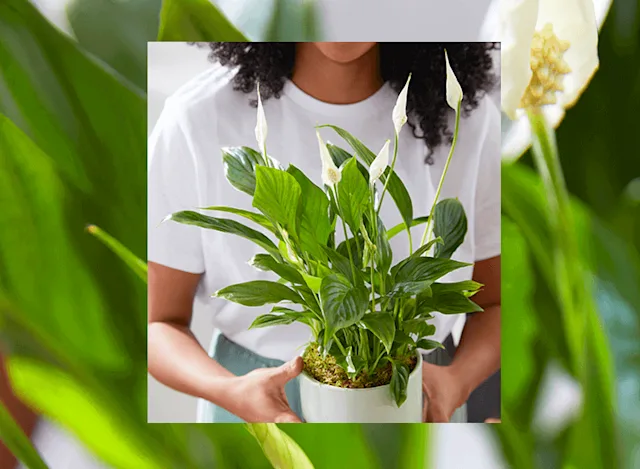
How to care for your peace lily?
Like all indoor plants, peace lilies need a few core things to survive - water, light, food and the right temperature and humidity levels. Nailing these early on will make sure your plant lives a long and healthy life!
1. Water every few days
Day-to-day care is pretty simple with a peace lily, as they only need enough water to keep the soil moist. So as long as they’re watered every few days, they’ll be happy. But if you ever do skip a watering and notice their leaves drooping, don’t panic! Peace lilies are quite dramatic. This is just their way of telling you that they need a drink. Once they’re hydrated again, they’ll perk right up.
2. Low light is best
Low sunlight is best for the peace lily, as they naturally grow on forest floors in the wild. But, if you want your plant to produce the bright white blooms that peace lilies are loved for, just pop it on a windowsill to get some light every now and then.
Peace lilies are also one of the only plants that pump out oxygen during the night. So if you keep one by your bedside, some say you may wake up feeling more refreshed than usual.
3. More humidity please
When it comes to caring for your peace lily, remember that they’re tropical plants. So they’ll be happiest somewhere humid. And while it may be tricky to replicate the environment of a rainforest here in the UK, popping them in a steamy bathroom, kitchen or conservatory is the next best thing.
4. Feed during their growing season
Usually, one of the biggest problems people face when looking after a peace lily is over watering and feeding. But less is more. So only use a liquid fertiliser during their growing season (March to September). If your plant is looking a little sad, you can feed them some controlled release fertiliser once a year. But remember that they are a low maintenance plant so don’t overdo it.
Different types of peace lilies
There are lots of different kinds of peace lilies. So many that it’d take us a while to name them all. Instead, we’ve made a list of the most common ones, highlighting their main differences.
Spathiphyllum ‘Patricia’ peace lily
While this variety of peace lily is compact in size, with flowers that don’t grow as tall, it’s still just as easy to grow and look after.
Spathiphyllum ‘Sonia’ peace lily
Want a peace lily you can easily pop on a shelf? Then this type is for you. They’re known for being a lot smaller than other varieties.
Spathiphyllum ‘White Stripe’ peace lily
As you might have already guessed, this kind of peace lily has beautifully matte leaves with a white stripe running up the centre of them. Perfect for adding some interest to a dim corner.
Spathiphyllum ‘Mauna Loa Supreme’ peace lily
If you’re looking for a larger variety of peace lily, the Mauna Loa Supreme is your go to. This plant’s leaves grow long and tall. And it can reach up to 3-4 feet in height!
Spathiphyllum ‘Wallisii’ peace lily
Wallisii is a smaller type of peace lily that’s particularly dense and features long, waterfall leaves that can drape up to 10 inches. It’ll make a statement no matter where it’s placed in a room.
Spathiphyllum ‘Picasso’ peace lily
Looking like something out of a painting, the leaves of the Picasso peace lily are unique. Each is flecked with eye-catching white, light green and emerald patches. It’s a real beauty.
How to care for a peace lily with brown leaves
If your peace lily is showing brown leaves, it might be time to give it a prune and nurse it back to health. To keep your plant looking vibrant, make sure you cut any dead, brown leaves out. If lots of the leaves are turning brown, it could mean that you’re giving your plant too much sun. Direct sunlight will scorch the leaves. So try moving it somewhere without any direct sunlight.
Brown leaves could also be a sign of underwatering. As a rule of thumb, if the leaves are wilted and brown, you’re underwatering your plant. But if they’re limp or mushy, that means you’re overwatering it. The earlier you spot these signs, the easier it will be to revive your plant.
How to repot a peace lily
Over time, your peace lily will need to be moved into a new home. But because many plant owners are intimidated by repotting, they’ll leave theirs in a pot that it has outgrown. That’s why we’ve put together these easy tips, to help you when you need to repot yours.
- Fill a bigger planter with soil, making a little well in the middle.
- Gently remove your peace lily from the pot it came in.
- Give the bottom of the pot a few taps to release any soil, being very mindful of your plant’s roots.
- Pop the plant into the hole, straighten it and cover with a few more inches of soil.
- Pat the soil down firmly to make sure the plant won’t budge.
- Give it a quick water and you’re all done.
Want more expert advice on caring for your plants? Have a read of our indoor plant care guide for everything you need to know.
And whenever you want to treat someone to a long-lasting pressie. Or breathe new life into your own home. We’ve got lots of exciting indoor plants, from super succulents to delicate ferns!