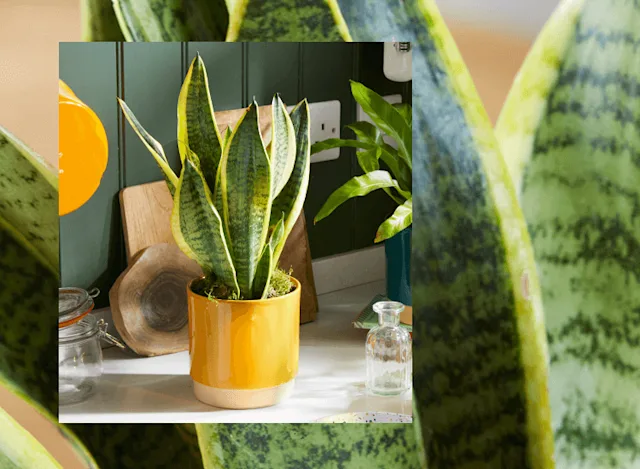
How to care for mother-in-law’s tongue plant
Snake plants go by lots of names. Scientifically, they’re known as sansevierias. But they’ve earned the nickname mother-in-law’s tongue because of their long, pointed leaves (which are supposed to represent the brutally honest nature of some mother-in-laws).
Despite what their nickname may suggest, snake plants aren’t tricky to look after at all. They’re actually very forgiving of new or forgetful plant owners.
1. Only water occasionally
Ever forgotten to text someone back then suddenly 2 weeks have passed? Us too. It happens. And snake plants completely get that, so they won’t make you feel bad if you ever skip a watering. Snake plants don’t get thirsty too often. If you give them too much water, you can actually cause their roots to rot.
We’d say you should only water this plant every 2 weeks in the summer, making sure the soil is completely dried out before watering it again. In the winter, you can definitely get away with watering it every 4 weeks when the sun is less intense.
2. Find a home with medium light
Whether they’re popped on a shady shelf or in a room that gets lots of light, snake plants won’t mind. They’re happy in most light conditions. But medium light makes them the happiest. If you can, put yours by a west-facing or south-facing window. Just make sure it’s not in direct sunlight as this will burn its leaves.
3. Repot in well draining soil
Snake plants don’t get peckish often. So they don’t need fertilising often - once or twice during the summer months is fine. The most important thing to remember when it comes to this type of plant is that it’s really susceptible to root rot. So it needs to be potted in well-draining soil. Succulent and cactus mix combined with a regular potting soil works well for this plant. And if your pot doesn’t have many drain holes, adding a few handfuls of pumice or perlite to the soil can help with drainage.
4. Mild temperatures are its favourite
If your home is a comfortable temperature for you, then chances are your snake plant will be happy with it too. The easiest way to make yours sad is by putting it near any chilly drafts, radiators or air conditioners. They’ll survive just as well outdoors too - especially in the summer. But from about October, when the temperatures really start to drop, you’ll need to bring it back inside. They don’t do well with frost or snow.
5. Don’t worry about humidity
Because these plants are so unfussy, it shouldn’t be a surprise that they’re fine in both dry and humid rooms. So they’ll grow just fine on an office desk, by your bedside or in a steamy shower room. The best thing about this plant is that it’s a natural humidifier and air-purifier. So not only can it remove harmful pollutants from the air, it’ll help up the humidity around it. So, if you’ve got any other plants that love humid air, sticking a snake plant next to them can help.
6. Keep an eye out for pests
If you’ve owned plants before, you know how tricky pests can be. But luckily, snake plants are pretty resistant to most bugs. Though, in poor conditions they can catch mealybugs or spider mites. If you notice any pests, it’s best to tackle them asap with a suitable insect killer spray.
Signs of an unhealthy mother-in-law’s tongue plant
If you’ve noticed your mother-in-law’s tongue plant is looking a little tired or droopy, don’t panic. There is usually an easy fix.
Soggy leaves - this is usually a sign that you’re overwatering your plant. You might also see the leaves going wrinkly or even get mouldy. So help your plant bounce back, stop watering it until the soil has completely dried out.
Brown spots - if your plant is starting to get brown leaves, this could be down to either pests or inconsistent watering. Again, give your plant a break and stop watering it for a little while. Even if you think it needs it, wait until the leaves have healed.
Yellow leaves - this is a direct sign of root rot and happens because the leaves aren’t able to get the nutrients or water they need from the soil. To fix root rot, first remove the wet soil from around the roots, then cut back the brown, rotting parts with a pair of sharp, clean scissors until you reach the healthy, white flesh. Then let the roots dry on a sheet of newspaper before replanting it into a clean, fresh pot.
Falling leaves - when snake plants haven’t been looked after properly, they’ll let their leaves fall over as a way to protect themselves. This is likely triggered by overwatering, so wait until the plant has completely dried out before you water it again. After a while, you should see an improvement.
How to repot a snake plant
Over time, plants outgrow their homes. And usually, they need to be repotted every 12-18 month or so. But snake plants can be perfectly happy in their pot for ages. We’d say you’ll only need to repot yours every 2-5 years. But if they grow in a space with low light, you can easily get away with not repotting them for 5-10 years.
If you do want to repot your snake plant, it’s really easy to do. Just fill a bigger plant pot with the right soil, making a little well in the middle for the roots. Then gently remove your plant from its original pot and pop it straight into the hole. Cover the sides with a few more inches of dirt, patting it down so it stays in place. Once you’ve given it a quick water, you’re all done! Check out our plant care guide for more tips.
Are snake plants safe for pets?
Snake plants are mildly toxic to pets like cats and dogs as they contain a natural chemical to protect themselves from insects, microbes and fungi. This chemical will cause pets to have an upset stomach if eaten. Luckily, snake plant leaves are pretty tough, so they’re harder for animals to really sink their teeth into. But we’d still recommend keeping the plant out of their reach. If you notice any of these symptoms in your pets, they may have ingested part of the plant so take them to the vet as soon as possible:
- Vomiting
- Drooling
- Loss of appetite
- Depression
Different Sansevieria plant varieties
Like with all plants there are lots of different varieties of snake plants.
1. Sansevieria trifasciata
This is the most common type of snake plant that you’ll find in most shops and garden centres. It has tall, dark green leaves with light grey/green horizontal stripes.
2. Sansevieria hahnii (or Bird’s nest snake plant)
The bird’s nest snake plant has short, wide leaves that are a dark and light green colour. As it grows, its shape starts to look like a nest. It’ll only reach about 6-8 inches tall and doesn't need much light to grow well either.
3. Sansevieria cylindrica
As you may have guessed from the name, this type has cylindrical leaves that end in a sharp, fierce point. If you live with any curious kids, then this kind may not be the one for you.
4. Starfish snake plant
The starfish plant has similar leaves to the cylindrical snake plant, but on this type, they fan out from the base, giving it an eye-catching starfish-like shape.
5. Sansevieria masoniana (or Whale fin snake plant)
This variety of snake plant has wide leaves that look like - you guessed it - the fins of a whale. Usually, they’re so big that you can only fit one or two leaves in each pot.
Want more expert advice on caring for your plants? Have a read of our indoor plant care guide for everything you need to know.
Or check our full collection of mood-boosting indoor houseplants, from peace lilies and orchids to the best-selling pineapple plant and boston ferns.
Shop snake plant

