
The benefits of indoor vertical gardens
Indoor vertical gardens are taking the world by storm as more and more find themselves inspired by urban gardens on Instagram and TikTok. And with the health and environmental benefits these gardens have, it’s not hard to understand why they’re getting so popular. As the name suggests, these gardens are made to grow vertically using shelving, trellises or other support systems, maximising all the available space and bringing your walls to life with luscious house plants. If you’re thinking of growing one of these modern gardens yourself, we’ve done all the research for you. Keep reading to find out the benefits of vertical gardens and how to create your own at home.
The health benefits of vertical gardens
Countless studies have been carried out to prove that vertical gardens, or living walls, can provide amazing health benefits. Not only are plants known for purifying the air and helping to remove any harmful toxins or pollutants, but they can also help your own wellbeing and provide a safe and comfortable environment for wildlife too. For those living in the city, living walls are a great way to improve the indoor air quality as they absorb pollutants and remove significant amounts of VOCs (volatile organic compounds). They can also regulate the temperature and decrease the UHI (urban heat island) which is a common environmental problem in metropolitan areas. When it comes to your own wellbeing, there’s no denying that plants make people feel happier and can improve enthusiasm, concentration, creativity and reduce frustration - ideal if you work from home. In fact, many businesses, and even schools, are incorporating green walls into their environment for better performance, reduced mental fatigue and a sense of community. A study from Frontiers in Psychology found that direct exposure to the natural environment can enhance learning by improving student attention and behaviours. Michael Brian McCullough from Frontiers in Psychology also says “in addition, plants have the potential to promote relaxation and recovery from stressful experiences”. Living walls in hospitals are also found to shorten recovery times for patients and improve psychological and psycho-physiological effects, including lowering blood pressure and increasing positive feelings.

The benefits of vertical gardens for the home
Vertical gardens are easily adaptable to any home, no matter its size or where you’re located. Whether you’re in a flat in the city centre or a house in the country, everyone will be able to benefit from living walls. Studies have shown that people tend to use living walls mostly for their Instagrammable aesthetics, and we would agree that it’s certainly an eye-catching decor statement. But, they’re also a great way to include more greenery around the home while maximising all the available space, and they can even be used as an indoor herb/medicinal/veggie garden too.
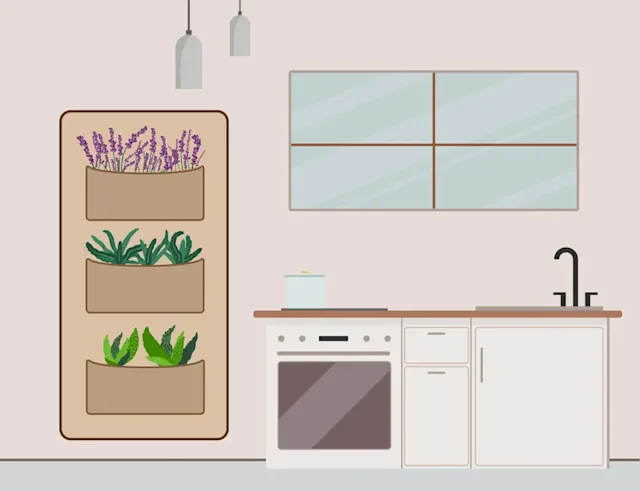
Of course, just like in work and education environments, having a vertical garden in your home can help you relax further after a long day and improve your mood. Theoretically, the bigger sized green walls, the more relaxed and connected to nature you will feel. If you have a balcony and want to grow your vertical garden outside, this can help contribute towards biodiversity and create a nicer environment for any wildlife. Green living walls provide roosting and nesting spaces for birds, hibernation opportunities for insects and also nectar and fruit for bees, birds and other insects, which will all greatly help in our fight to save these wonderful creatures.
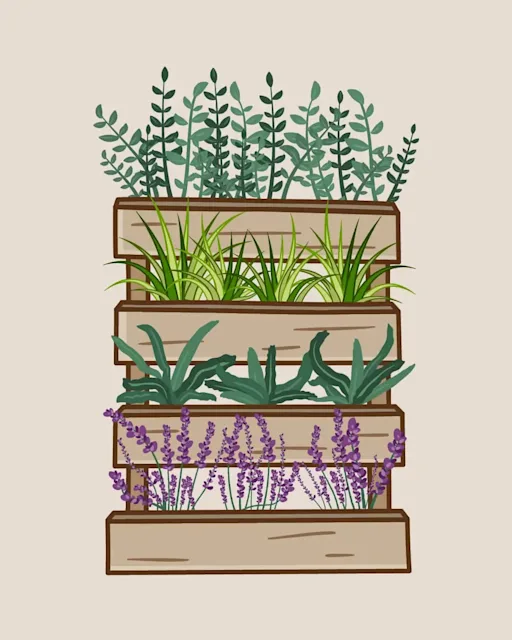
You will need:
A wooden pallet
Staple gun
Landscaping fabric
Scissors
Potting soil
Herbs
1. Prepare the pallet
Firstly, you’ll want to prepare your pallet for the garden. This may include cleaning it, sanding it down, removing or adding extra slates and even painting it to fit the style and aesthetic of your home.
2. Staple the landscaping fabric
To keep weeds at bay and protect your vertical garden, landscaping fabric is a must-have. Place your pallet, with the back facing up, on the floor and cut the fabric to size. Remember, the fabric will need to cover both the back and the sides of the pallet. Staple the waterproof fabric around the edges of the slates running across the back. If you feel the need, you can also add a second layer of fabric for extra protection.
3. Create pockets for the plants
Once the fabric is securely in place, flip the pallet over and create pockets to fit inside the slates. Measure the distance between the bottom and top deck board and add an extra two inches. Then, cut as many pieces as you need from the fabric and staple them inside the top and bottom boards.
4. Fill with soil and plant
Lastly, put the pallet vertical garden in its final position, either outside or inside, and fill the pockets with soil. Then, plant your herbs, flowers, and whichever plants you desire, step back and admire your creation! Want to learn more about plant care? Take a look at our extensive plant care guides Browse our range of letterbox flowers and plants to brighten up your home and bring your space to life.