
Daisy flower meaning and colour symbolism
You know summer is on the way when pretty little wild daisies start to pop up everywhere in the UK. We find it hard not to smile whenever we see a daisy! With old memories of making daisy chains in school, or putting daisies in our hair or using them to decide whether our crush liked us back or not, it’s impossible to not think fondly of this little flower.
Daisies have been loved for thousands of years. And they have quite a lot of interesting meanings behind them too. Here, we’ll be exploring all the different daisy meanings, and what their colours symbolise too.
A brief history of daisies
Daisies have been around for a very long time. Since at least 2,200 B.C. It’s well-known that the ancient Egyptians grew them in their gardens for herbal remedies. Many people believed that eating daisies could help ease stomach ulcer pains, gout and fever. Even today, you can find wild daisy tea, which is said to be a natural way to help with coughs, bronchitis and general pain and soreness.
In the Old English language, daisies actually used to be called ‘day’s eye’. This is because the petals would close over its yellow centre at night and re-open during the day. Ever heard the term ‘fresh as a daisy’? Well, this is where it came from, as it meant someone had a good night’s sleep.
What do daisies symbolise?
Because daisies have been around for so long - and there are hundreds and hundreds of species - they have a lot of meanings. But, the most common ones are:
Innocence and purity
According to an old Celtic legend, when an infant died, God would sprinkle daises over the land as sympathy flowers to help bring comfort. Since then, daises have been associated with innocence and purity.
New beginnings
In Norse mythology, the daisy is known as the sacred flower for the goddess of love, beauty and fertility. Because of this, daisies symbolise childbirth, motherhood and new beginnings. So they’re a great flower to give to welcome a new baby!
True love
Because daisies are composite flowers, they are actually two flowers that have blended together in complete harmony. So, they have a meaning of true love. If you’ve got an anniversary coming up or want to send some romantic gesture flowers, then daises are a perfect choice.
What are the different colour daisy meanings?
White daisy
While you might only be familiar with the classic white daisies, there are a whole bunch of other colours out there. And, of course, each colour has its own special meaning. Like most white flowers, white daisies represent purity and innocence with their bright and fresh appearance. White daises can be included in wedding flowers or wedding decor, which will look amazing for a spring wedding! Or, sent to new parents as a congratulations bouquet.
Yellow daisy
Yellow daisies symbolise joy, optimism and friendship. They are often considered a representation of cheerfulness and positivity. Sending a bouquet of sunny yellow daisies is a wonderful way to brighten someone's day, and are perfect for infusing a space with positivity.
Pink daisy
Pink daisies have a meaning of gentleness, love and romance. So, if you have a special someone in your life, or you want to confess your feelings, pink daisies are ideal to send. They also symbolise feminine energy - making them great to give to any woman you admire.
Blue daisy
Blue daises have a meaning of long-term loyalty and trust so you can send them to a friend, a long-term partner or a family member who you care very much for. These daisies are pretty rare to find but not impossible. They look very similar to asters, which are actually part of the daisy family.
Orange daisy
Orange daisies represent happiness, joy, friendship and warmth. They are the most joyful type of daisies to send and receive! The perfect pick-me-up, you’ll easily make someone’s day with a bunch of bright orange daisies.
Facts about daisies!
Want to know even more? Here are some fun facts about daisies!
Daisies provide a valuable food source for honeybees and bumblebees. So just another reason to love having them around!
The daisy is April’s birth month flower.
Daisies grow all year round.
They are found everywhere on earth except Antarctica.
What are the most popular types of daisies?
Daisies come in a wide range of varieties. From the quaint English daisy to the striking Gerbera, each type offers a unique beauty and charm. Let’s explore which daisies are the most popular:
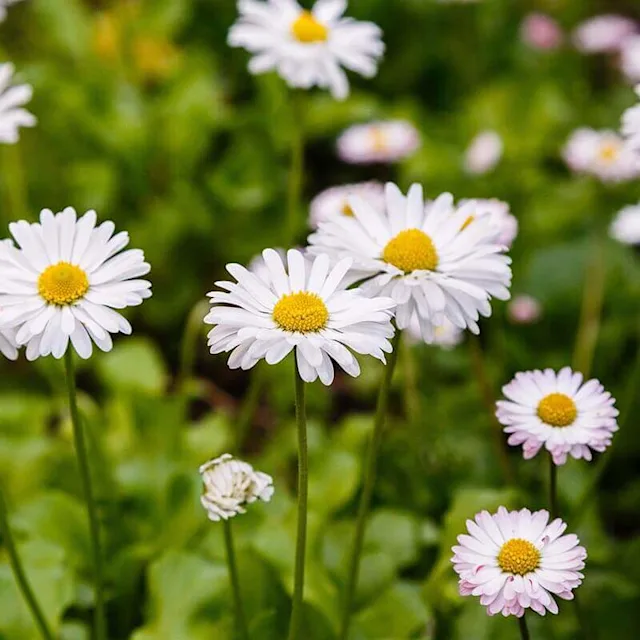
English daisy: English daisies are small, delicate flowers with white or pink petals and a bright yellow centre. They are often seen in lawns and meadows.
Gerbera daisy: Gerbera daisies are prized for their large, showy flowers and are often used in floral arrangements. They are available in a wide range of colours, making them a versatile choice for gardens and bouquets.
Shasta daisy: Shasta daisies are known for their large white petals and yellow centres. They are a garden classic, with a cheerful and timeless look.
African daisy: African daisies come in a variety of vibrant colours and are known for their striking, colourful petals. They are often used in landscaping to add a splash of colour.
Painted daisy: Painted daisies are known for their vibrant, multi-coloured petals, which can range from red and pink to white and yellow. They add a splash of colour to gardens and borders.
How to care for your daisy bouquet
Caring for a daisy bouquet can help keep the flowers fresh and vibrant for a longer period. Here are some tips on how to care for your daisy bouquet:
Trim Stems: Cut an inch off each stem at a diagonal angle to help flowers absorb water.
Clean Water: Use lukewarm water in a clean vase with floral preservative. Ensure the vase is debris-free.
Remove Lower Leaves: Strip leaves off the submerged part of stems to prevent bacterial growth.
Refresh Water: Change vase water every 2-3 days with fresh, lukewarm water to deter bacteria.
Avoid Sun and Drafts: Place the vase in a cool spot with indirect light to extend freshness.
Mist Petals: Gently spray daisy petals with water daily to maintain hydration.
Remove Wilted Flowers: Discard any dying flowers to help others last longer.
Re-cut Stems: If daisies droop, re-cut stems at an angle for better water intake.
Keep Away from Fruit: Avoid placing near ripening fruit to prevent accelerated aging.
By following these care tips, you can enjoy your daisy bouquet for an extended period.
If you want to learn about another popular spring bloom, discover the symbolism and colour meaning of tulips.
You may also find floriography, the symbolic meaning and language of flowers, an interesting read too.