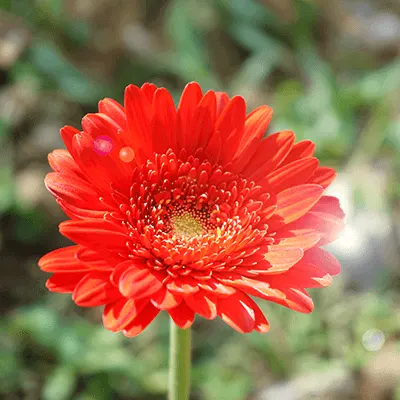
The interesting history of gerberas
Although gerbera flowers have only really boomed in popularity over the last 30 years, they’ve actually been around for a really long time. Native to South Africa, America and Asia, they were first discovered in 1727 by a Dutch botanist who named the flower after another botanist, Traugott Gerber. They were introduced to the UK in the 19th century. So, they’re relatively new for us compared to other flowers.
In the 1970s, gerberas became pretty popular as cut flowers. And since then, they’ve only grown more and more loved thanks to their super vibrant colours! They’re cultivated all over the world, and you’ll no doubt see them a lot in spring and summer bouquets and gardens.
What do gerbera flowers mean?
Gerbera flowers can have different meanings in different cultures. For example, the Egyptians believe that they represent a closeness to nature and devotion to the sun, which is why they’re so loved as spring and summer flowers. But, the Celts think that they can help reduce the stress of everyday life. So, if you know someone who is struggling and needs a little pick-me-up them a bunch of flowers just because, to help brighten their day.
In general, though, they typically mean beauty, innocence, purity and loyal love. Because of their huge range of brights colours, they also have a meaning of cheerfulness too, which we couldn't agree more with!
What do the different colour gerbera symbolise?
Pink gerbera
With so many different colours available, it should be no surprise that each one has its own meaning. And which colour gerbera you choose to send can help convey your feelings, so it’s important to know what they mean. Here are some of the most popular gerbera flower colour meanings: Pink gerbera flowers symbolise grace and gentility. They’re usually sent as get well soon flowers to anyone feeling under the weather to remind them of their strength. But, different shades of pink mean different things too. Light pink gerberas can express admiration or sympathy, while dark pink flowers are a symbol of gratitude.
Red gerbera
Red gerbera flowers have a meaning of unconscious love or to be fully immersed and surrounded by love. They’re perfect to send as anniversary flowers or romantic gesture flowers to express your everlasting love for someone.
White gerbera
Like most white flowers, white gerberas symbolise innocence and purity. This makes them the perfect gift to welcome a new baby. They can also be included in wedding bouquets for brides and bridesmaids or wedding decor.
Yellow gerbera
Bright and sunny yellow gerbera flowers represent friendship and happiness and are great to send to your friends as birthday flowers or if you want to let them know how much you appreciate them.
Facts about gerberas!
Can’t get enough of these brightly coloured blooms? Well, here are some more fun facts about gerbera flowers that you might not have known?
As they're technically a daisy, gerberas are considered as April’s birth month flower
They’re one of the most popular floral symbols in modern tattoo designs.
Gerberas are the 5th most popular flower in the world.
They are available all year round.
Like sunflowers, you’ll find they turn towards the sun.
Want to find out more? Since gerberas are part of the daisy family, learn more about the meaning and colour symbolism of daises.
And, take a look at the symbolic meaning and language of flowers,to learn all about modern floriography too.
Shop flowers

